
The Physics of Superconductors
In the world of materials physics, superconductors have long been the “Holy Grail.” These materials, when cooled to extremely low temperatures, possess an astonishing property: electrical resistance virtually disappears. This means they can conduct electrical current without dissipating energy as heat. This unique characteristic has led to great interest in superconductors and their applications.
Until now, most superconductors only worked under very specific conditions, requiring extremely low temperatures or extremely high pressures. This made them expensive and impractical for most real-world applications. However, recently, a group of South Korean scientists announced a breakthrough that could change all of this.
The Discovery of LK-99
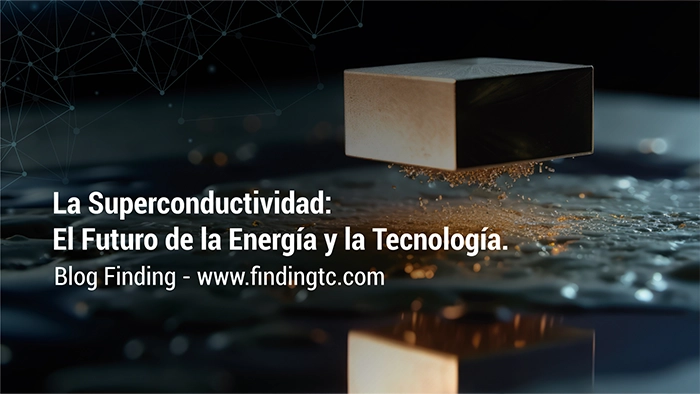
South Korean scientists claimed to have created a room-temperature superconductor called LK-99. Produced through a firing process combining lanarkite and copper phosphide, the material was reported to exhibit two key signs of superconductivity at normal atmospheric pressure and temperatures up to 127 degrees Celsius: zero electrical resistance and magnetic levitation.
The claim generated both excitement and skepticism. The study’s authors said that LK-99 could “open a new era for humanity.” However, the scientific community remained cautious because previous claims of room-temperature superconductivity had proved unfounded. Further evidence was needed, but if LK-99 had lived up to its promise, it could have triggered an unprecedented technological and energy revolution.
Potential Benefits and Challenges
If LK-99 or similar room-temperature materials were confirmed as superconductors, they could offer significant benefits. Eliminating energy loss in electrical transmission and distribution would dramatically improve energy efficiency. Superconductors can also generate extremely powerful magnetic fields with applications in medicine, physics research, and transportation, including magnetic levitation.
However, the challenges are evident. Creating room-temperature superconductors is a complex and challenging technical achievement. Moreover, most superconductors only function under very specific conditions, limiting their widespread applicability. While this news is exciting, the scientific community must maintain a healthy skepticism until solid evidence is presented.
Room-temperature superconductors remain an exciting and potentially revolutionary prospect. Although substantial work is still needed to confirm and develop such a breakthrough, the possibility could usher in a new era in materials physics and technology.